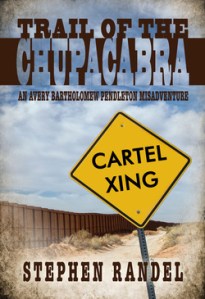
Trail of the Chupacabra by Stephen Randel is the story of Avery, an eccentric and quirky geek/explorer, who enters Mexico in search of the mythical animal – Chupacabra. His companions in this adventure are Zippy, a burnt out hippy and a crazy private militia (called as “Southwest Texas Revolutionary Armed Confederate Border Operations Militia STRAC-BOM”; headed by General x-Ray). It is about how they get entangled in the rivalry between the feared drug lord Padre, his enemy Barquero and the Mexican army, and how they eventually come out of it.
Books
How to Write a Book Review?
The best way to write a review is as if you are telling a dear friend about the book. You are not “reviewing” the book and passing a judgement about it being good or bad or trying to give it a rating score (4/5, 8/10, etc.). It should be a much more intimate experience. Like you are discussing the book with a buddy, talking about what you liked, what you did not like, how you felt while reading it, would you want your friend to read it, what do you think about the author, her style, etc.
Conversations are not about the number of words in it, do you start a discussion thinking – I will cover this topic is 500 words? Similarly, reviews should not be about its word count. Tell what you want to tell – no matter how many or few words it take. Continue reading
Kindle Single Review: Fox 8 – A Story
This is a very unconventionally written book, where the narrator is a fox who has recently learned human language and his story telling is characterized by improper grammar and abundant typos. Fox 8 is a story about a fox who gets exposed to humans and learns their language by listening to stories told by human mothers to their kids. Continue reading
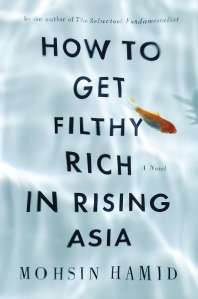
Book Review: How to Get Filthy Rich in Rising Asia
“And where money-making is concerned, nothing compresses the time frame needed to leap from my-shit-just-sits-there-until-it-rains poverty to which-of-my-toilets-shall-I-use affluence like an apprenticeship with who already has the angles all figured out.” – Excerpt from How to get Filthy Rich in Rising Asia by Mohsin Hamid.
Is Bollywood Finally Waking up to Indian Literature?
Some of my best and most memorable cinematic experiences in life involve movies based on novels/books. Be it the Lord of the Rings series, the Harry Potter series, Life of Pi, Pursuit of Happyness, Hunger Games, A beautiful Mind, and above all The Godfather – the list of such awesome movies is endless. There are few things in life which can match the joy one gets by seeing one’s favorite novel adapted into a good movie. It is always exciting to compare the way you visually imagined the book with the way the director of the movie has done, put faces to the characters, see which portions of the book were dropped and what new elements (sub-plots, characters) were added. Watching Ang Lee’s Life of Pi was one of the happiest things I did last year. Continue reading
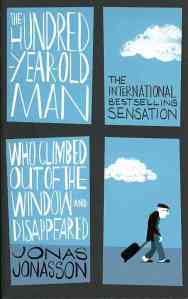
Book Review: The 100-Year-Old Man Who Climbed Out the Window and Disappeared
Allan interrupted the two brothers by saying that he had been out and about in the world and if there was one thing he had learned it was that the very biggest and apparently most impossible conflicts on earth were based on the dialogue: “You are stupid, no, it’s you who are stupid, no, it’s you who are stupid.” – Excerpt from The 100-Year-Old Man Who Climbed Out the Window and Disappeared by Jonas Jonasson
Book Review: The Dinner by Herman Koch
The Dinner is a psychological thriller written in Dutch as “Het diner” by Herman Koch and translated wonderfully to English by Sam Garrett.
It is the story of two families who are meeting over dinner to discuss the involvement of their sons in a well publicized act of crime. The fact that their sons were involved is not known to anyone apart from the families, although the crime itself, being recorded on camera and gone viral on the internet, has become a national sensation. Between the various courses of meals and the usual dinner time, banal discussions, the families are trying to decide their next course of action regarding their sons. Continue reading
Book Review: The City of Devi
The City of Devi, by Manil Suri, is the story of Sarita and Jaz, both in search of their love, who happens to be the same person, Karun, in a war ravaged and under nuclear attack threat Mumbai. Told alternatively from the points of view of Sarita and Jaz, the story is interesting and engaging. Karun, a physicist and a closet homo-sexual, is heart-broken after being betrayed by Jaz, reluctantly moves on and marries Sarita, a statistician. Although he loves and cares for her, their relationship is not like a typical couple. Jaz, on the other hand is still madly in love with him and wants him back. The relationship and the emotional dynamics between Karun and Jaz, Karun and Sarita, and Sarita and Jaz is very well and sensitively written. You really feel the emotional turmoil these characters are undergoing. Kudos to Manil for such a brilliant portrayal of these complex characters and their interactions. Continue reading
Book Review: Behind the Beautiful Forevers
“As every slumdweller knew, there were three main ways out of poverty: finding an entrepreneurial niche, as the Husains had found in garbage; politics and corruption, in which Asha placed her hopes; and education. Several dozen parents in the slum were getting by on roti and salt in order to pay private school tuition.” Excerpt from Behind the Beautiful Forevers: Life, Death and Hope in a Mumbai Undercity by Pulitzer Prize winning author Katherine Boo
Mumbai in Ink: Five Amazing Novels About Mumbai
Some stories are about people, some are about people living in a city, and some are about cities with people living in it. Most stories set up in Mumbai belong to the last category. The role played by Mumbai in the narrative is so powerful that it becomes an inseparable part of the story, one of the main characters, sometimes even more important than the main characters. Mumbai in these novels is not just a prop, it’s the hero (some times the villain), it is what defines these stories. Put Mumbai out of these, and these stories are dead. Continue reading


Allan interrupted the two brothers by saying that he had been out and about in the world and if there was one thing he had learned it was that the very biggest and apparently most impossible conflicts on earth were based on the dialogue: “You are stupid, no, it’s you who are stupid, no, it’s you who are stupid.” – Excerpt from